Initiated as Design Researcher in Residence for the Design Museum's Future Observatory (Curated by Abbie Adams). Funding support from UKRI and AHRC.
How can selective narratives about which species belong in certain geographies limit our imaginative responses to changing ecologies?
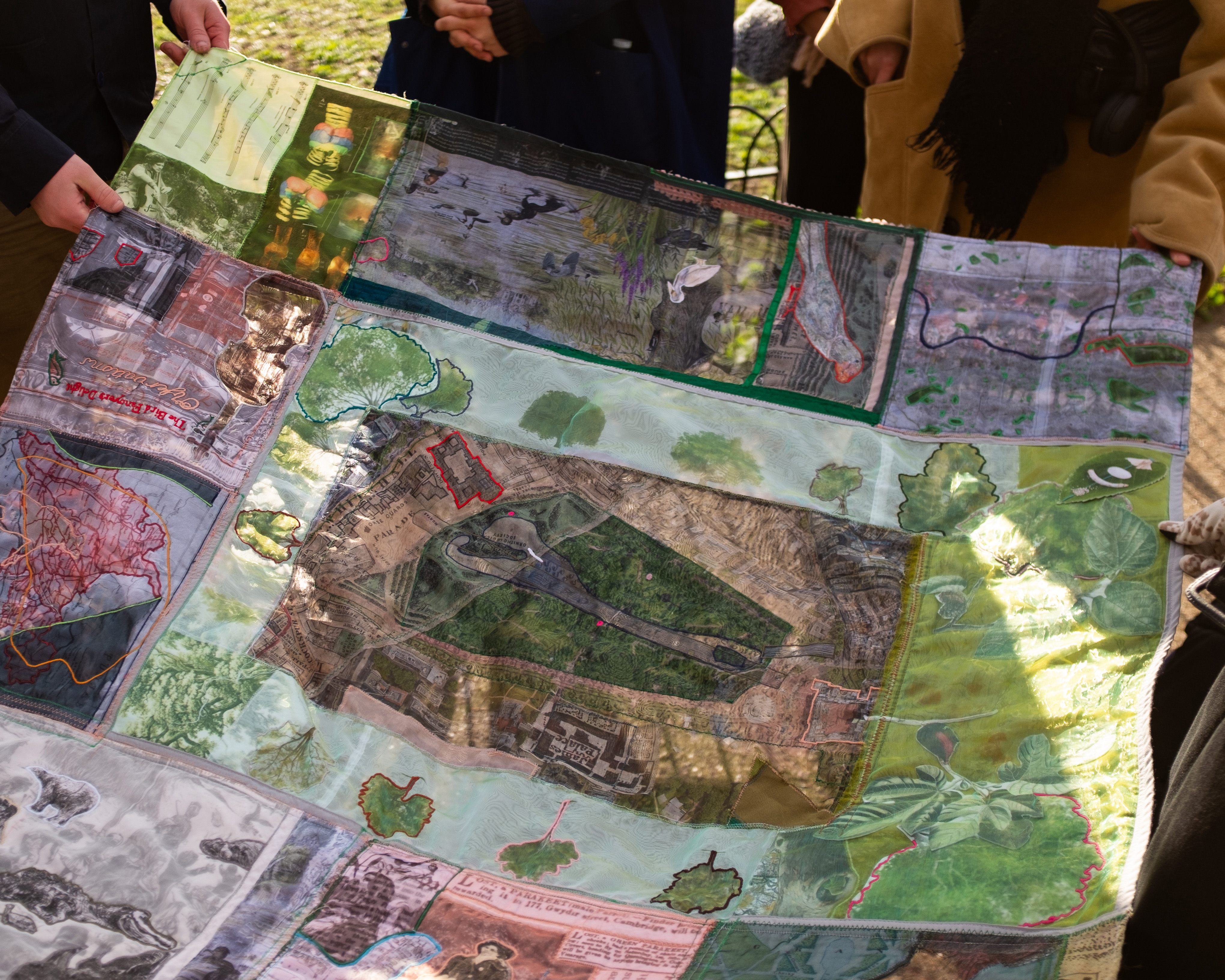
Paracologies invites you to convene with parakeets, a species of bright green bird that roost in the manicured parks of London. Through walking, stitching, and interspecies worldbuilding, the project moves beyond an outdated idea of what is native (and therefore natural) - and asks you to question who gets to belong in the artificial ecologies of transplanted urban nature.
The project asks;
How does the thriving parakeet population of London reveal the artificialities of “nature” and “landscape”?
What can we learn from parakeets as both historical actors and as fellow kin we share the city with?
How can counter-mapping methods of walking, sewing and co-creation help us re-imagine living within the anthropocene?
Paracologies unfurls through textile "research quilting", guided walks and creative collaboration. Pandemonium: Music for Parakeets was also produced during this residency, and pressed to vinyl. Through in-depth collaborations with musician Jessica Roch, Pandemonium fosters more-than-human communication by composing music for parakeets. Through the travails of the parakeet, Christie hopes to better understand how we might coexist on this damaged planet and foster solidarity across species boundaries.
Through the travails of the parakeet, Christie hopes to better understand how we might coexist on this damaged planet and foster solidarity across species boundaries.
To become a Paracologist, get in touch with Christie at hello@christie.studio
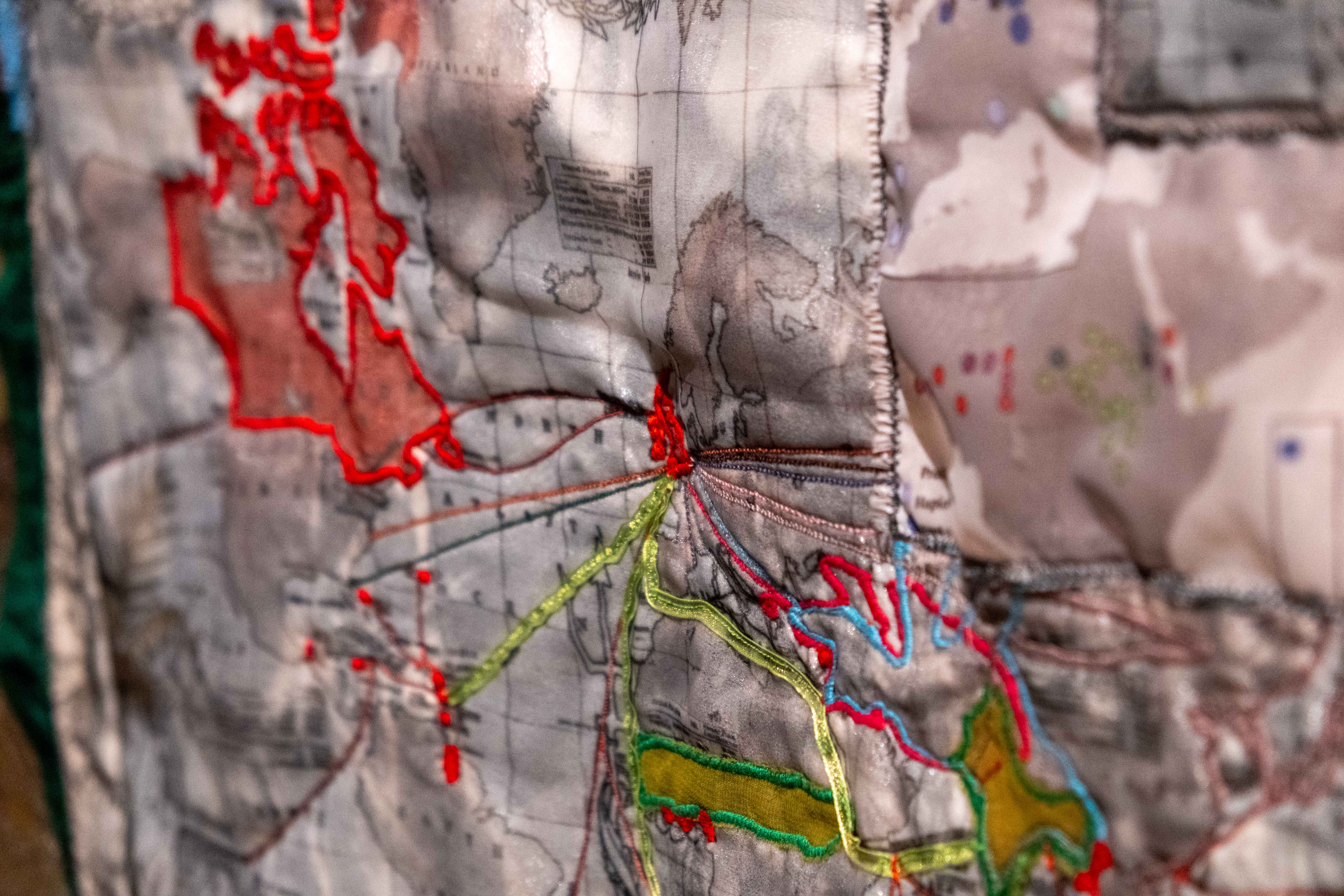
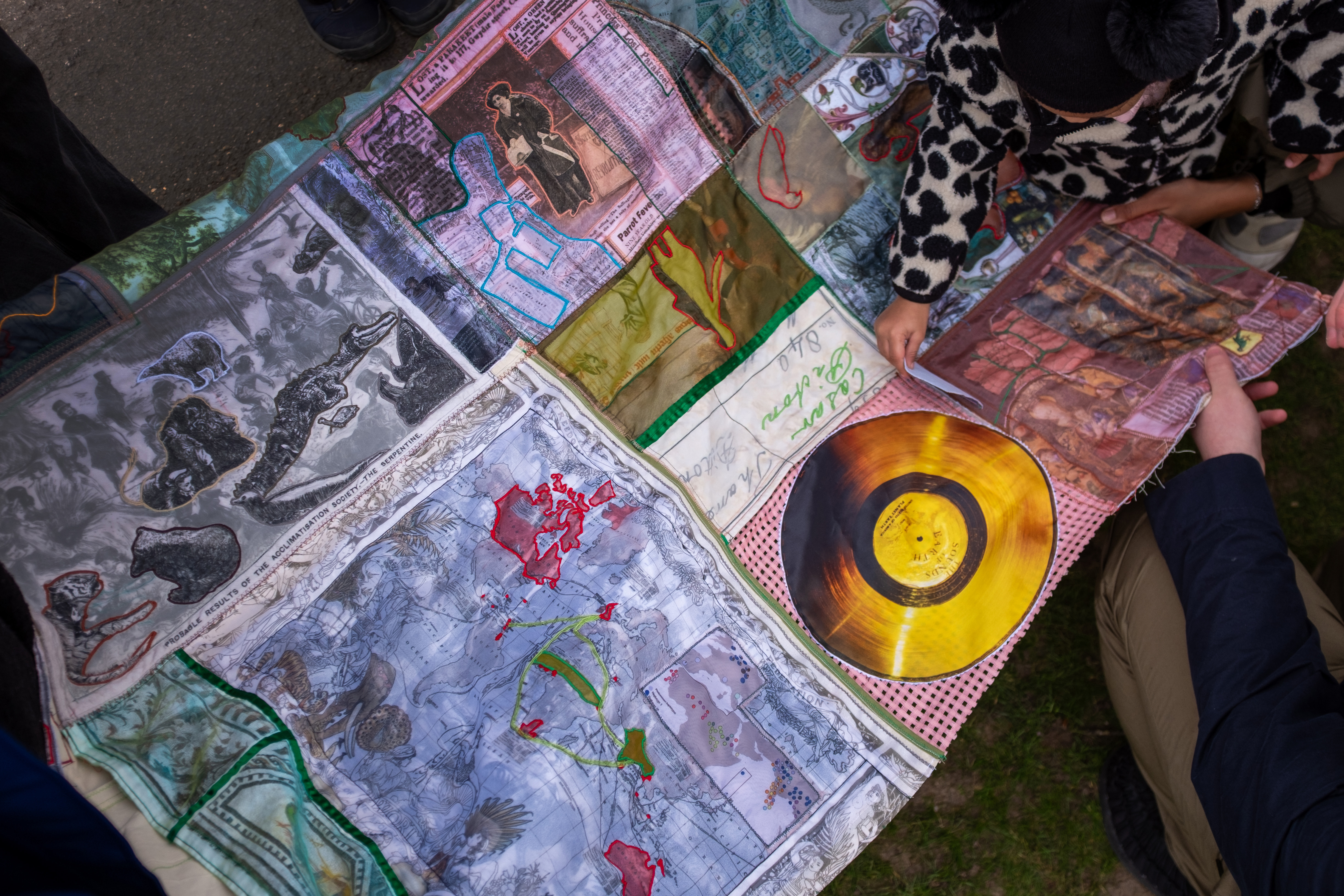
A tactile research tool that stitches together and maps layers of information, stories and histories throughout the project's ongoing research. Moving research out of the archive and into physical space, the quilt holds embroidered information. Over the duration of the residency the quilt was iterated, adding new panels, embroidering new knowledge as research progressed. Each panel reveals different facets of the entangled histories that connect humans and parakeets, from Roman frescos to dispossessed princesses. The patchwork nature of the quilt resists the editorialising nature of academia where ideas are whittled down for clarity, instead embracing the myriad myths, tangents and dead-ends encountered through the research process. As a modular design, the quilt is able to be reconfigured and reconstituted, and has most recently taken the form of a jacket, allowing Christie to literally embody the research.
Engagement is central to Christie's research process. The quilt allowed the residency's research to be 'taken on a walk'. Over the course of the residency Christie conducted 11 walking workshops - or walkshops - inviting people to convene with Parakeets in the parks and urban ecologies that Parakeets call home.
Aided by the research quilt, these sessions bridge the archival, the natural and the elemental, immersing participants in the histories and the present context of Parakeets.
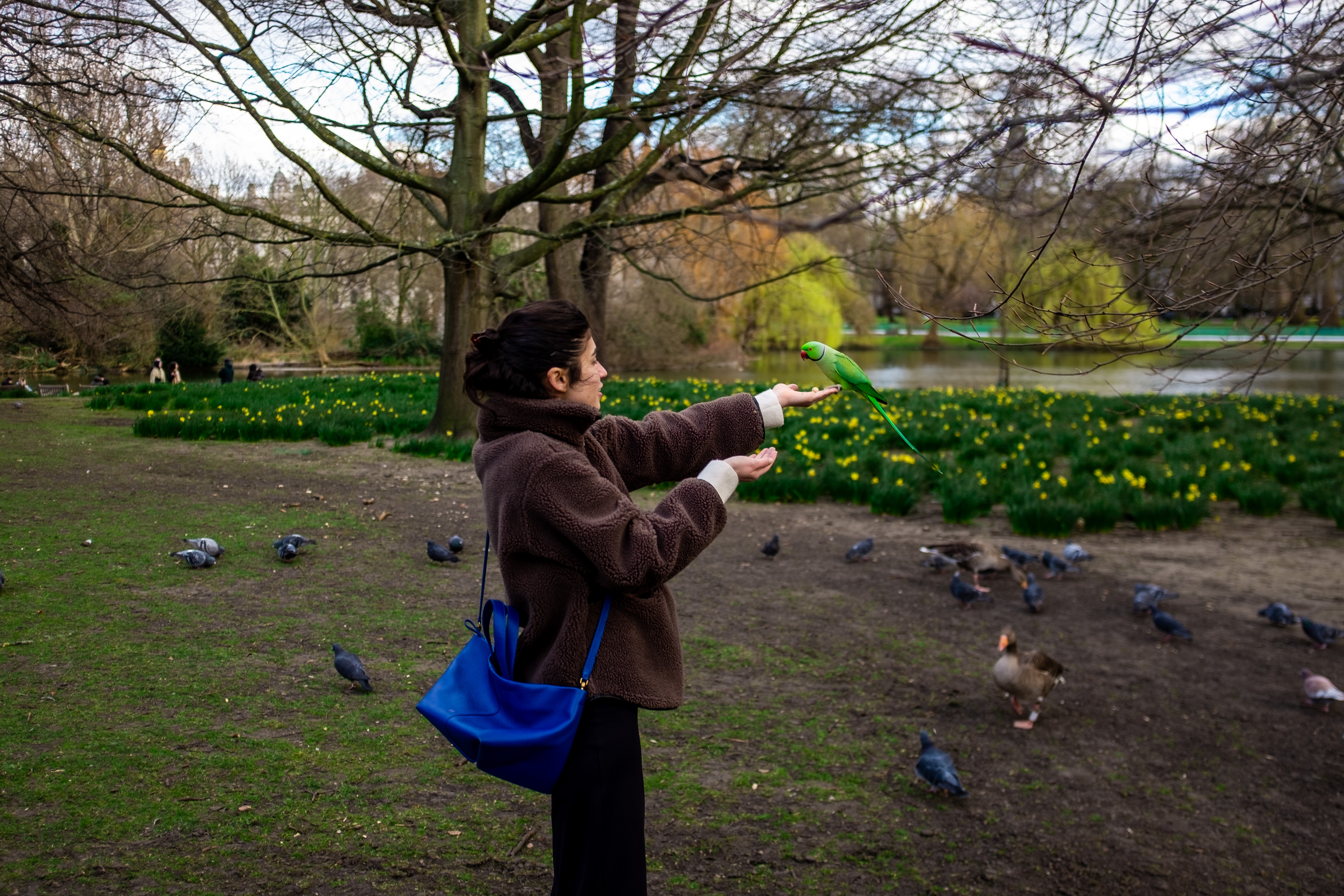
Walkshops take place within Parakeet Ecologies (paracologies), and through these sessions humans and Parakeets meet through food. While many people are aware of Parakeets, and have heard tall tales of their origin or their impact on "native" species, very few have met one face to face. Walkshops invite humans to attune themselves to the Parakeets, and dialogue through food, song, and care.
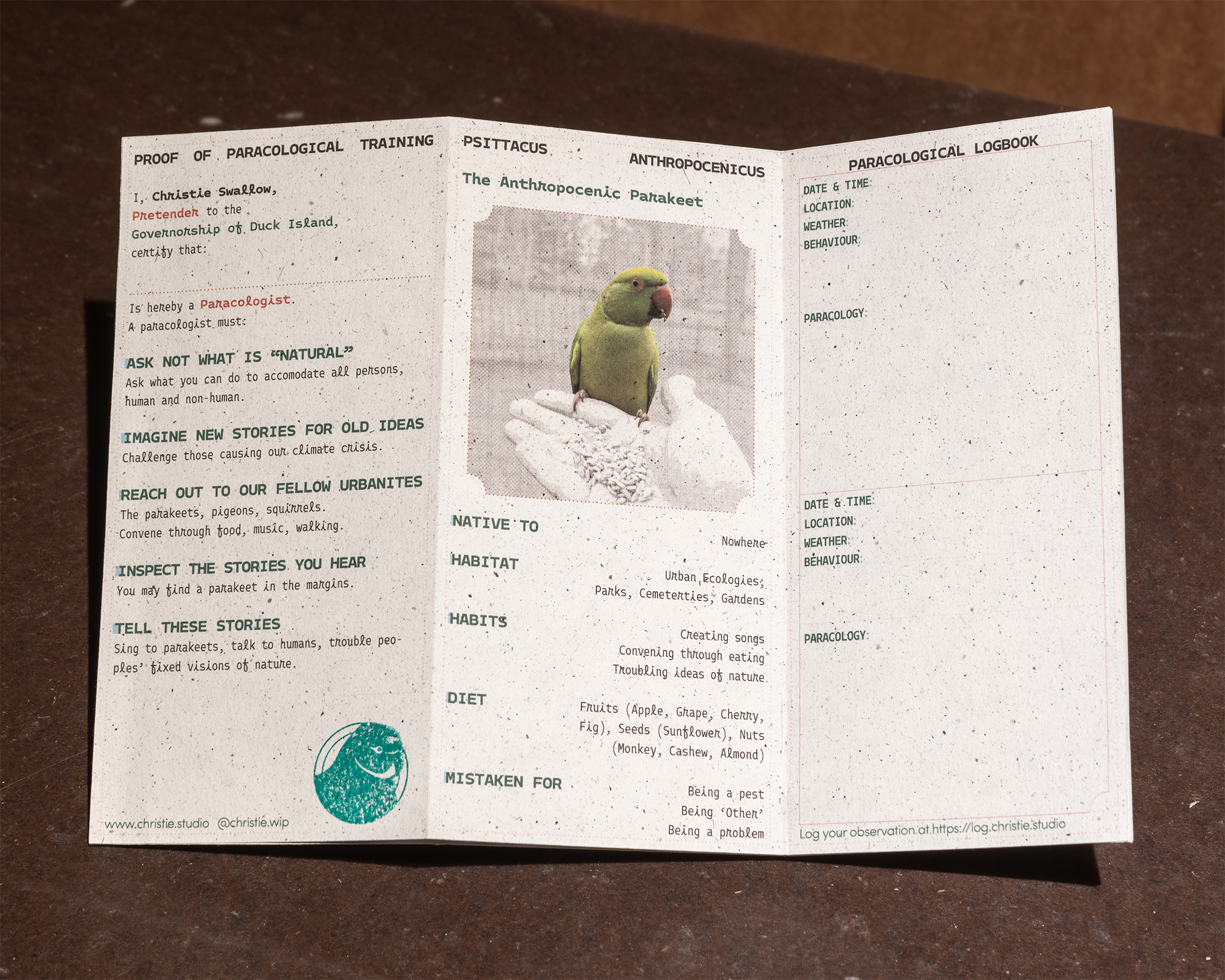
Through attending a walkshop, participants become a Paracologist. Paracologies is a discipline defined by its embrace of the strange urban and anthropocenic ecologies, and those that dwell within. Being a Paracologist is about moving beyond outdated concepts of nativity and belonging, and instead finding ways to extend care to all more-than-human beings. Paracologists are certified through a certificate which lays out the disciplines tenets.
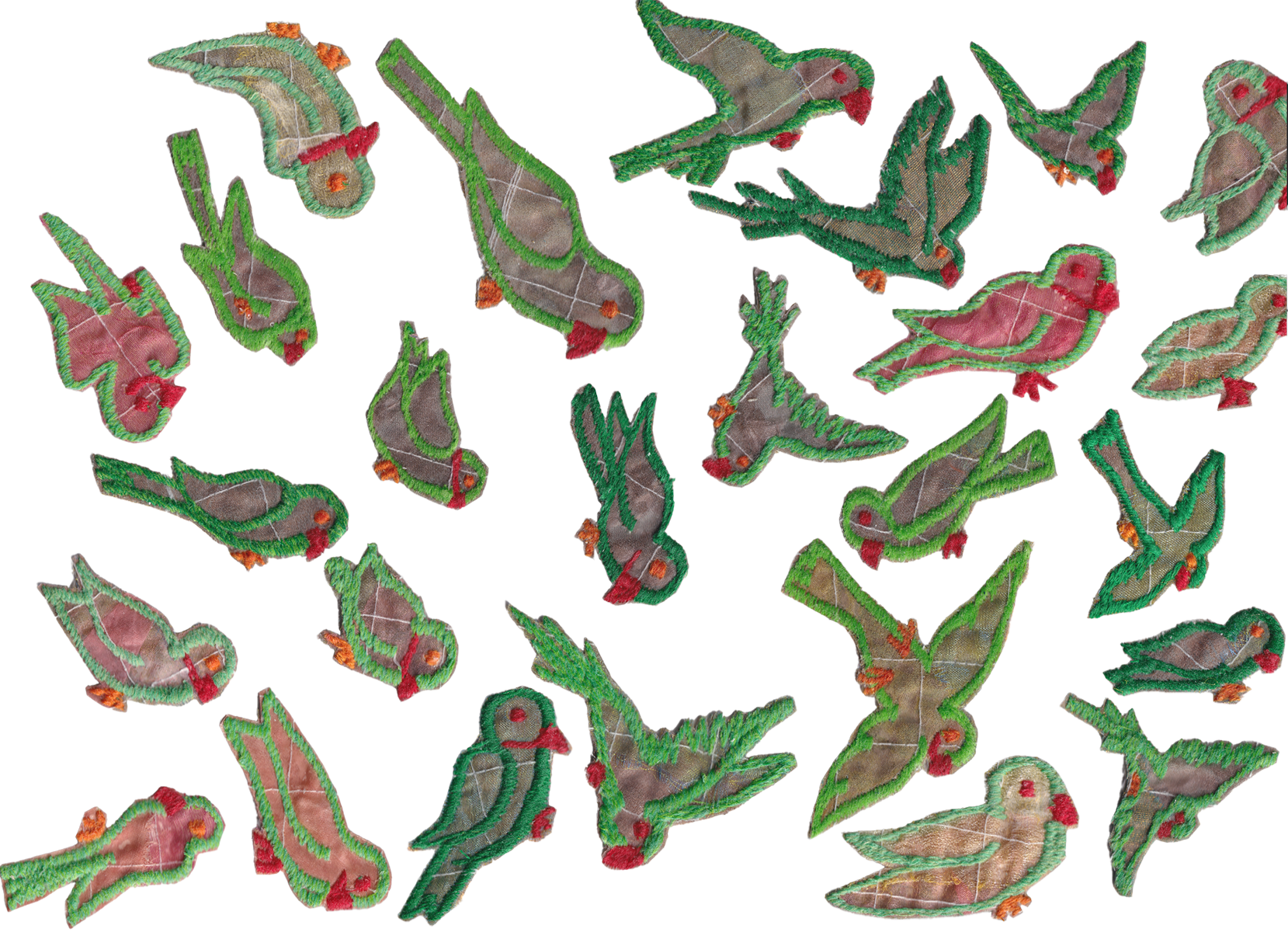
Parakeet Pins show solidarity with our fine feathered friends. These pins began as a reaction against the RSPB's lack of Parakeet representation in it's merchandise, and taps into a medieval tradition of wearing Parakeet symbols to show one was in love. These pins, handmade from offcuts of the research quilt, act as a sign of solidarity with Parakeets and signifier of being a Paracologist.
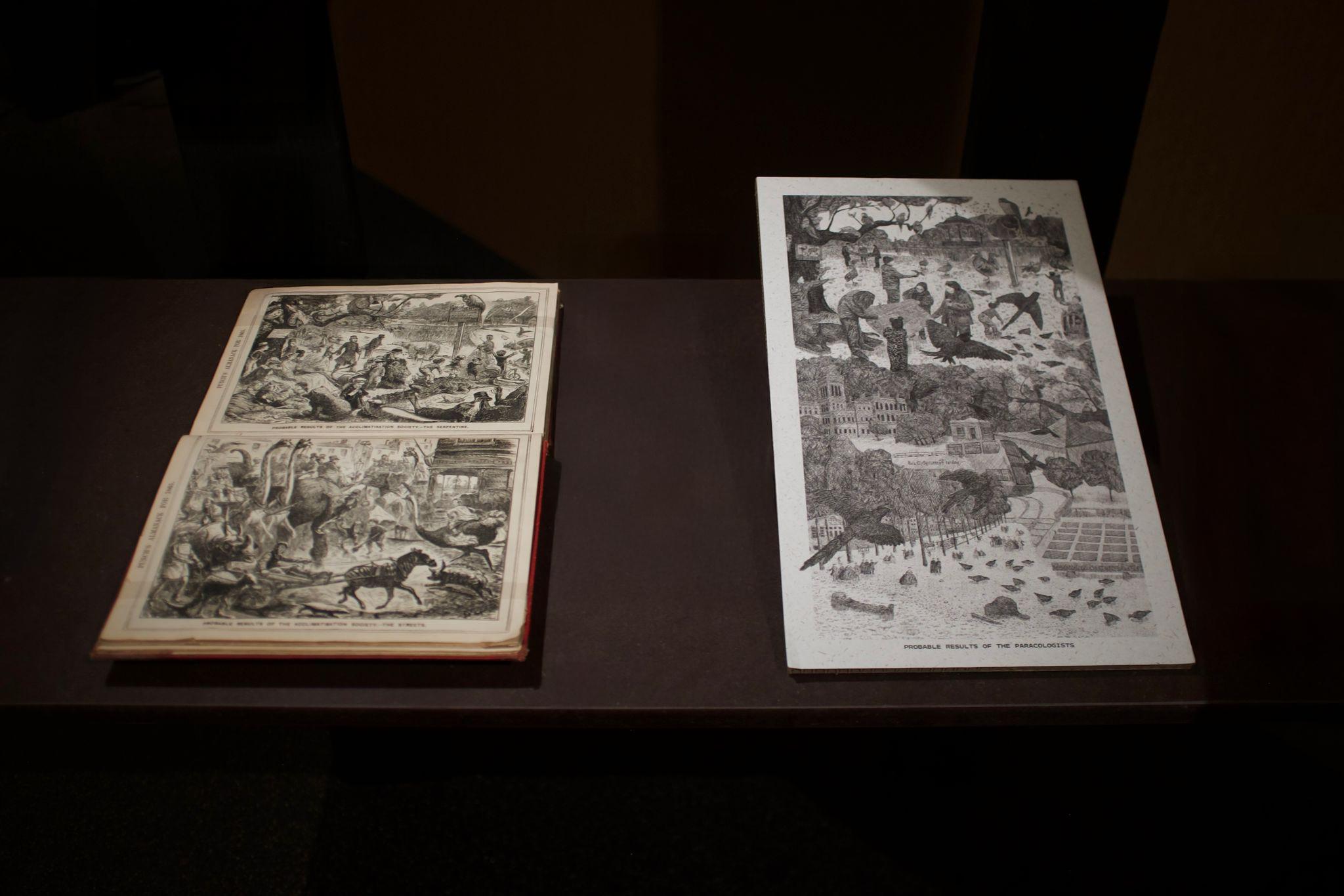
In the 1860's an aristocratic society was founded in London, dedicated to introducing plants, fish, animals and birds from the British Empire, and exporting British flora and fauna to the colonies. The Acclimatisation society, based on Duck Island in St James's Park, was satirised in Punch Magazine for its plans of introducing "exotic" species to the imperial core. Today, the paracologies of London are unintentionally echoing the dreams of these men. Probable Results of the Paracologists is a commission by Max Cooper-Clark that reinterprets the Punch cartoon to celebrate the Paracologists of today.
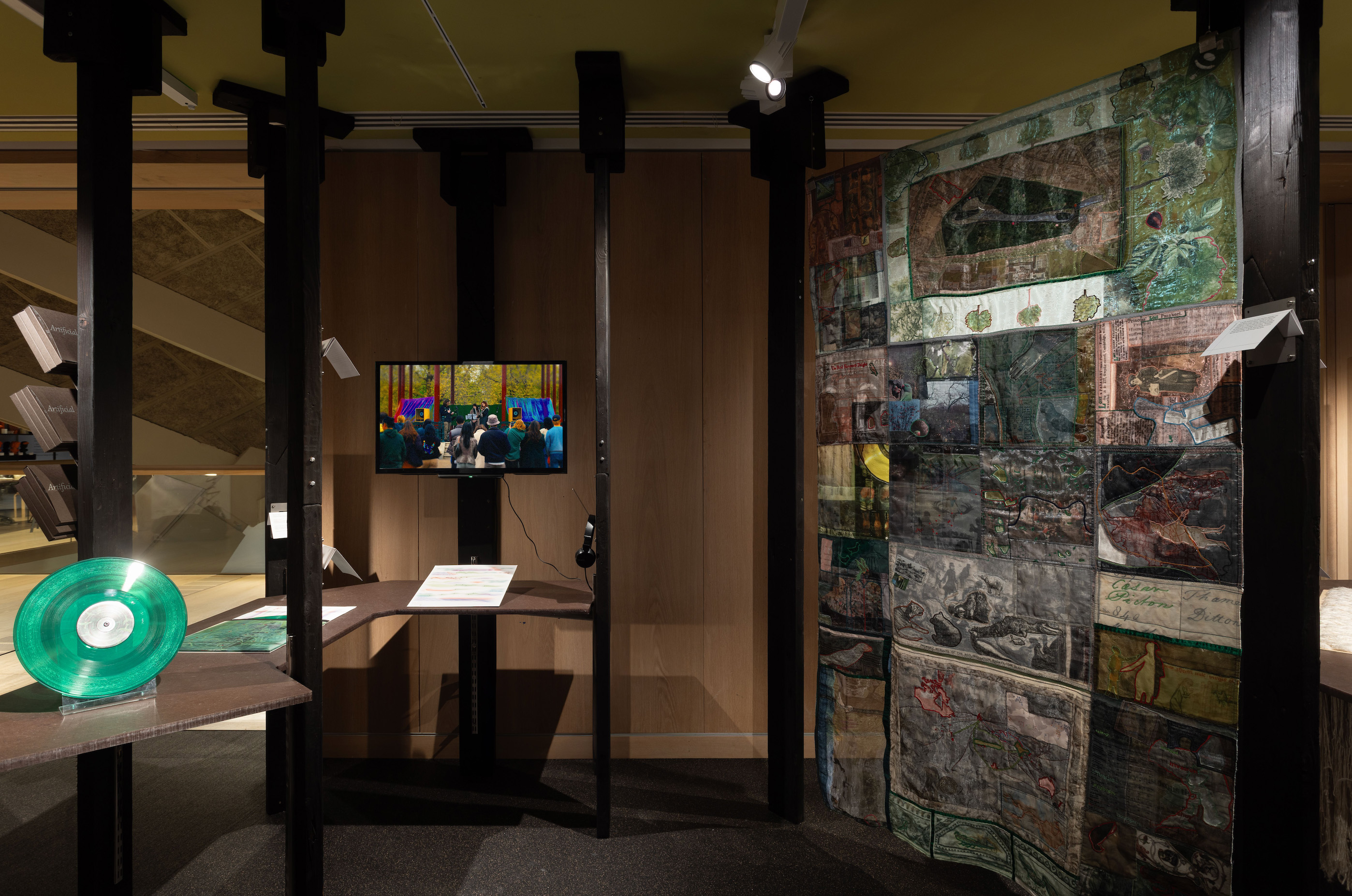
Exhibiting alongside Laura Lebeau, Hani Salih, and Neba Sere (Cur. Abbie Adams), 2025. Photos by Rob Harris.
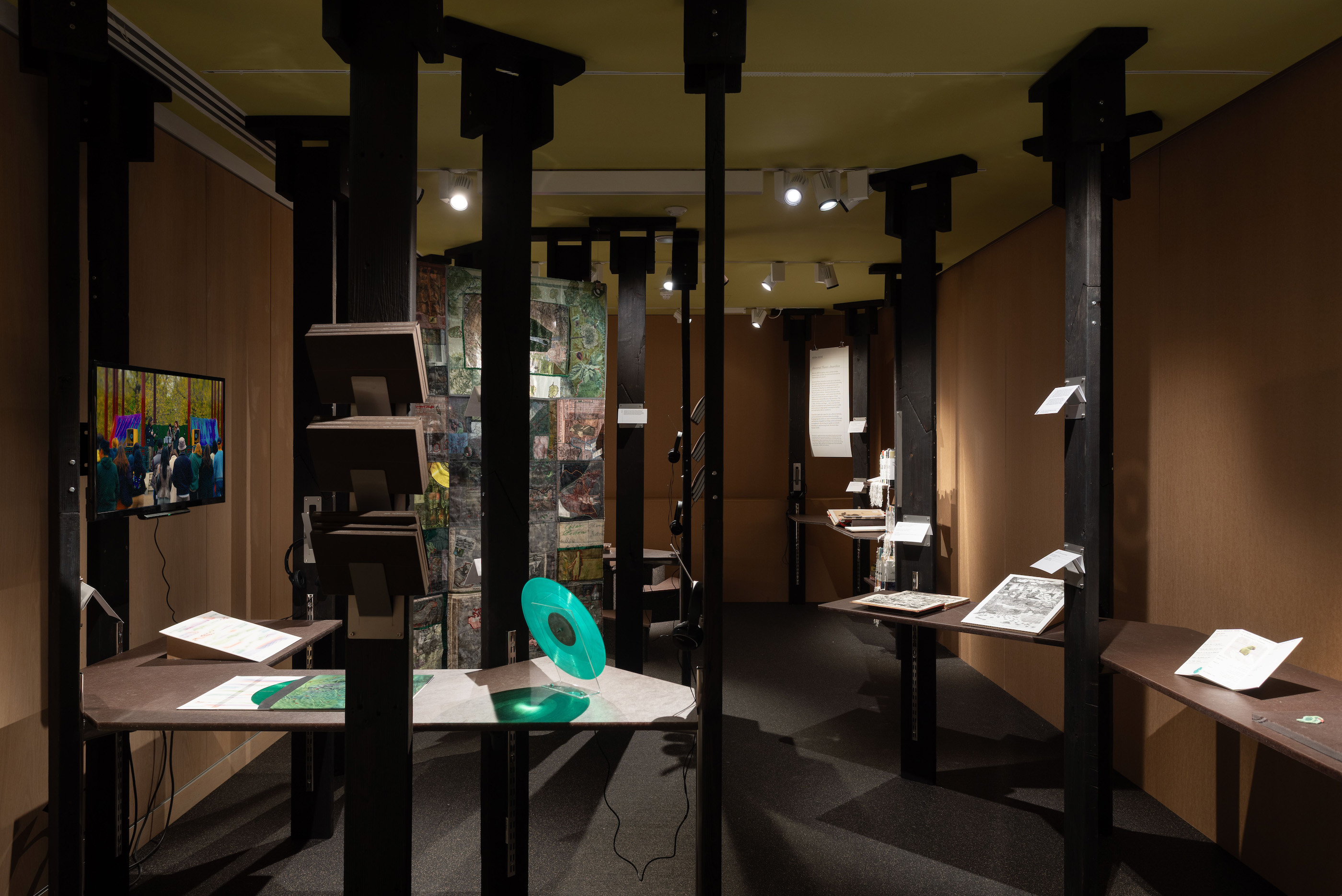
-18e.jpg)
-2.jpg)
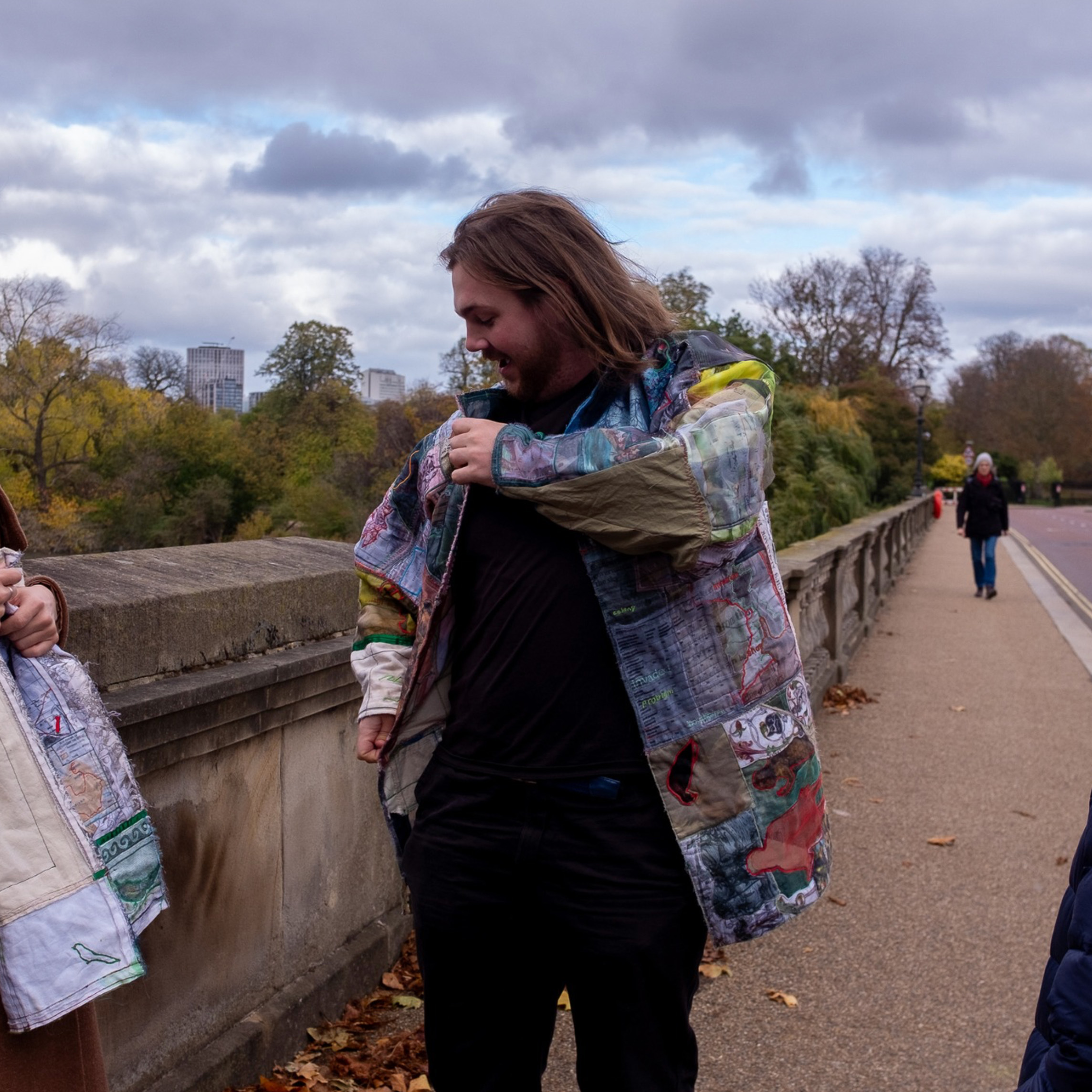
Following the completion of the Design Museum Design Researcher Residency, Paracologies has continued to grow. The modular quilt has been reconfigured to serve as a research jacket; Bespoke walkshops have been delivered for groups including the London Festival of Architecture, MOTH Academy, The BBC, and The Royal Geographic Society. To become a Paracologist, contact Christie directly at hello@christie.studio